
Ask some people why they chose the Ozarks retirement lifestyle, and they’ll tell you: They didn’t plan on retiring in the Ozarks.
Maybe they were researching all the nation’s popular retirement spots — Tennessee, Texas, Florida, Georgia, the Carolinas. But there was just something about the Ozarks that they couldn’t let go of.
Or maybe they drove through Arkansas or Missouri, and it stopped them in their tracks.
Or a friend mentioned the Ozarks. They looked it up at midnight. And three hours later they were still reading with excitement and anticipation.
No matter their path to the Ozarks, they had something in common: They were tired.
Tired of wanting more. Tired of feeling like home may be somewhere else. And tired of the feeling that year after year, their best life keeps passing them by.
So, they did the math.
Maybe they even read this article on why retiring to the Ozarks is the smart choice.
They visited the Ozarks on scouting trips. Twice. They drove the back roads. And they thought: I could actually live here.
But then comes the harder question — the one that’s difficult to Google.
Once the boxes are unpacked, what does the Ozarks retirement lifestyle actually feel like?
Your Ozarks Retirement Lifestyle: The First Morning
The first thing most people notice is the Ozarks’ change of pace.
No alarm set for 5:45. No mental triage of the morning commute. And no sense, before your feet even hit the floor, that you’re already behind.
Of course, retirement anywhere does that.
But the Ozarks amplify it.
Because the landscape outside your window reinforces it. A forested ridge. A lake that catches the early light. A deer at the edge of the yard, patient and unhurried — what could be a foreshadowing of the rest of your life.
Even the Springfield suburbs don’t have the flurry of activity that some retirees are used to.
The Ozarks are a morning cup of coffee on your deck. Bird songs filling the air as night gives way to dawn. A baseline peace that your body instantly recognizes. Gratitude that you’re right where you’re meant to be.
A Typical Tuesday for Your Ozarks Retirement Lifestyle
This is the part that surprises people most: the ordinary days.
Retirement research tends to focus on the big draws — the lakes, the trails, the cost savings, the tax advantages, the surprising healthcare picture. And all of these are Ozark pluses.
But a spreadsheet can’t capture the feeling of a good Ozarks retirement lifestyle.
It’s driving into town on a Tuesday for coffee and running into someone you met at the farmers market last week. And it’s spending five hours on the water when you only planned for two.
It’s discovering that you have time to cook a real meal. That the vegetable garden you always meant to start is finally growing.
That you’re sleeping seven hours and waking up without anyone’s agenda but your own.
It’s the hardware store owner who knows your name by your third visit.
The neighbor who drops off a bag of tomatoes in July because he had more than enough.
The local diner where the coffee is bottomless, the pie is homemade, and the regulars save booths every morning.
This is what people mean when they talk about life in the Ozarks. And it’s what they find. The hospitality here is not performative. People help because that is how things work out here — because at some point, they needed help too, and someone showed up.
Thinking about making a move to the Ozarks?
The free Relocation Starter Kit walks you through everything you need to know — which area fits your lifestyle, what your budget buys, what to look for before you visit any property, and how to plan a scouting trip that counts.
On-the-ground knowledge from a transplant you won’t find in a standard relocation guide.
The Lake Effect on Your Ozarks Retirement Lifestyle
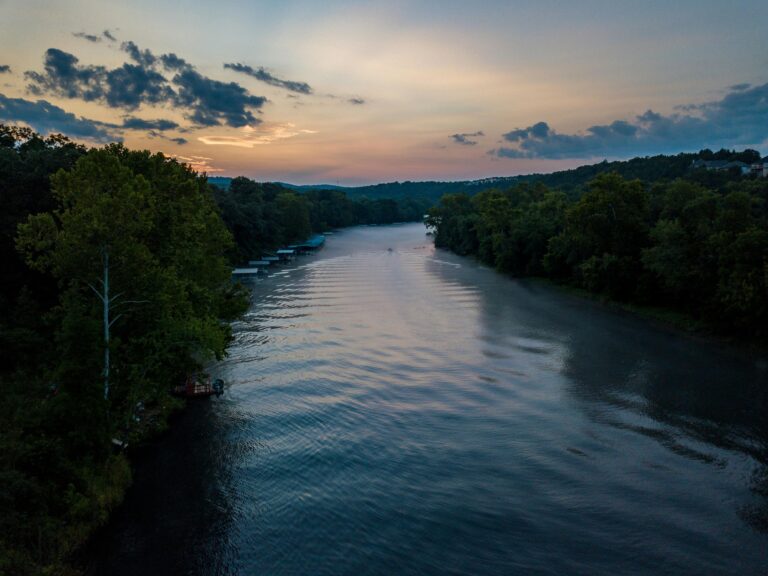
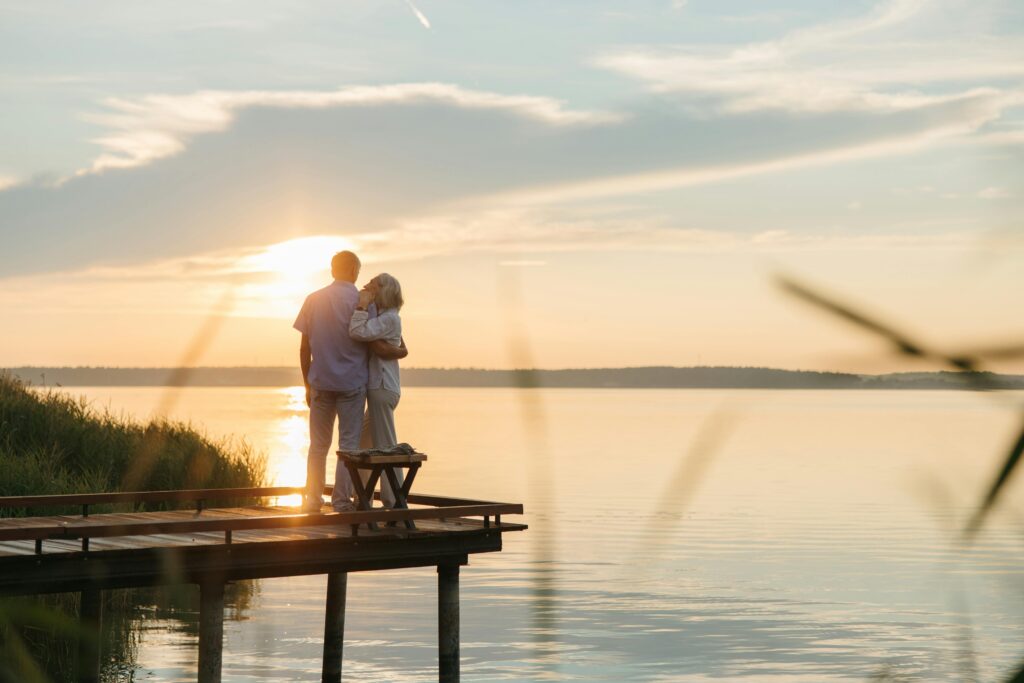
If you retire near water in the Ozarks — and there is a lot of water to retire near — it becomes part of your daily clock in.
In the summer, you might walk down to the dock at dawn to see what the surface is doing.
In the fall, you might sit on the bank and watch the tree line reflect in colors you don’t quite have words for.
Then, in winter, when the boats are in storage, the lake is quiet and the water is still and glassy, it feels like something that belongs to you.
For people who settle near Ozarks lakes, they become the organizing rhythm of daily life.
Morning walks along the bank. Afternoons on the water. Evenings on the porch with a view that costs significantly less here than it does anywhere near a coast.
The Four Seasons of Your Ozarks Retirement Lifestyle
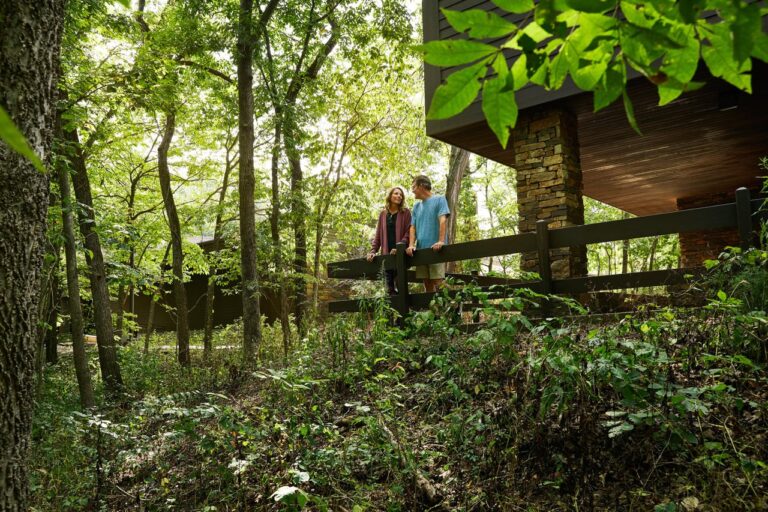
Four distinct seasons means the year has shape.
It means something to look forward to with every turn of the calendar’s page.
Spring fades brown hillsides into bright green landscapes — a beautiful, welcoming sight for those coming from the sterile concrete of crowded cities. Mornings and evenings are often cool enough to sit comfortably outside.
Summer is warm, green, and humid, and the lakes become the center of everything.
Fall is the season that makes photographers plan trips around it — the hardwoods here turn in October in long rolling waves of color that stretch for miles across ridgelines.
Winter is mild by most standards. Snow comes a few times a year and rarely stays long. The roads clear quickly. The light on a cold January morning, with a dusting of snow on the hills and smoke from a neighbor’s chimney, is the kind of thing that makes people realize they made the right decision.
The Ozarks Community
Here’s the thing about small Ozarks towns that the internet does not fully capture: They require a little patience in the beginning, and then they give back more than you put in.
People here are not unfriendly to newcomers.
But they’re also not automatically “your people” on day one.
Trust is built at the same pace as everything else out here — slowly, genuinely, without much performance. You show up to the church activities. You wave first when driving down the road. When at the local hardware store, you ask an employee about the best fishing spots. You volunteer somewhere. And you keep showing up.
And then, somewhere in your first year here, you realize you have the best neighbors.
People who check on you if you haven’t been around. People who text when the road conditions get bad. And people who bring you something from their garden because that’s just what you do out here.
Retirees who move to the Ozarks often say the same thing when you ask them what they didn’t expect: the people. The community. The way this region takes care of its own.
Thinking about making a move to the Ozarks?
The free Relocation Starter Kit walks you through everything you need to know — which area fits your lifestyle, what your budget buys, what to look for before you visit any property, and how to plan a scouting trip that counts.
On-the-ground knowledge from a transplant you won’t find in a standard relocation guide.
What You Give Up for the Ozarks Retirement Lifestyle
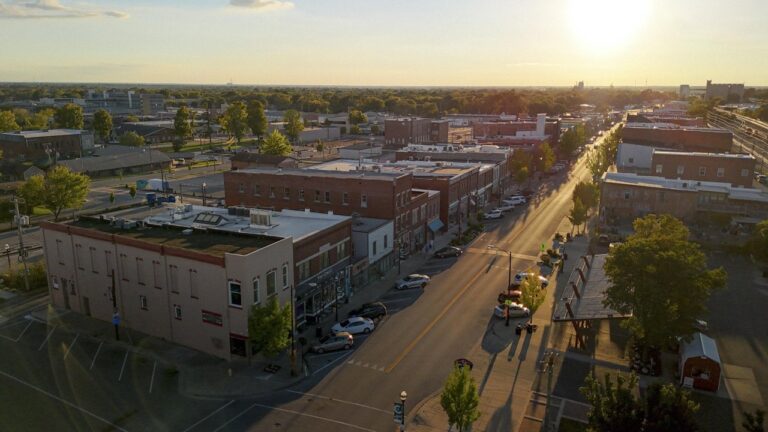
An honest picture of this life includes the tradeoffs.
Depending on where you live, the nearest major hospital may be 45 minutes away. Not 10.
If you like the kind of dining scene where a new restaurant opens every other week, that’s not most of the Ozarks. If you need access to a major city, you’ll be driving for several hours.
Some parts of the region still have spotty cell service on back roads, though broadband access has improved significantly in recent years.
And again, the pace is also an adjustment.
This is not a place that hurries. If that sounds like relief to you, that’s a good sign. If it sounds like it might drive you a little crazy in the first month, that’s also worth knowing about yourself before you make the move.
What You Don’t Give Up
You don’t give up beauty.
You don’t give up outdoor access that people in coastal cities pay more to live near.
And you don’t give up the feeling that your money is working for you. Your property tax bill is a fraction of other states. Your monthly living expenses are manageable on Social Security and a modest pension. And the land around you is yours to do with what you want. That’s a kind of freedom which is hard to put a number on. But it’s very easy to feel.
And finally, you don’t give up the sense that your time is fully yours.
Retirement in the Ozarks sounds right — here’s where to start
Now comes the harder question: which area, which town, and what does your budget get you?
The free Relocation Starter Kit walk you through this and more. Rural vs. suburbs decision, what your budget buys at different price points, what to check before you tour any Ozarks property, and how to plan a scouting trip that counts. Plus a location fit score tool and town-for-you quiz that helps you narrow down the right Ozarks area.
On-the-ground knowledge from someone who made this move himself — and built this site to help others research theirs.
Frequently Asked Questions About an Ozarks Retirement Lifestyle
Is the Ozarks a good place to retire?
Yes. The Ozarks offer affordable housing, low property taxes, four distinct seasons, and lakes and rivers that people in coastal states pay dramatically more to live near. For some people, there are tradeoffs — major cities require a drive, and the pace of life is slower. Retirees who visit and feel the pull of the Ozarks usually make the move. Those who need city energy nearby usually don’t.
What is it actually like to live in the Ozarks in retirement?
The region has much lower housing costs than most of America, an overall low cost of living, lakes and rivers, and state parks and a national forest nearby. Plus, there are retirement hot spots like Branson, Missouri, and Mountain Home, Arkansas.
Is the Ozarks affordable for retirees?
Yes, and the numbers back it up. Missouri’s median home price runs around $271,000; Arkansas comes in lower still, at about $240,000, and rural Ozarks communities beat those state medians. Property taxes are notably low. A home in rural Arkansas or Missouri could have an annual tax bill of just a few hundred dollars per year. Both states are also Social Security-friendly: Arkansas hasn’t taxed Social Security income for years, and Missouri eliminated the tax in 2024.
What are the downsides of retiring to the Ozarks?
Depending on where you live, the nearest major hospital could be 30 or more minutes away. Outside of Springfield, most of the Ozarks doesn’t have a bustling restaurant scene. Major cities require a three-hour or longer drive. Cell service is spotty on back roads, though broadband has improved. And the pace — which is a popular draw — takes adjustment. This is not a place that hurries.
What states make up the Ozarks?
The Ozarks span parts of four states — Missouri, Arkansas, Oklahoma, and a small corner of Kansas. But the heart of the region, and where most retirees settle, is in southern Missouri and northern Arkansas. Towns like Branson, West Plains, and Mountain Home are all within this core, and Springfield is the largest city in the region.
How do I make friends after retiring to the Ozarks?
Community here doesn’t happen on day one. People are friendly but trust builds slowly — that’s just how small towns work. Retirees who settle in quickly get involved in the community through church, volunteering, and civic organizations.