
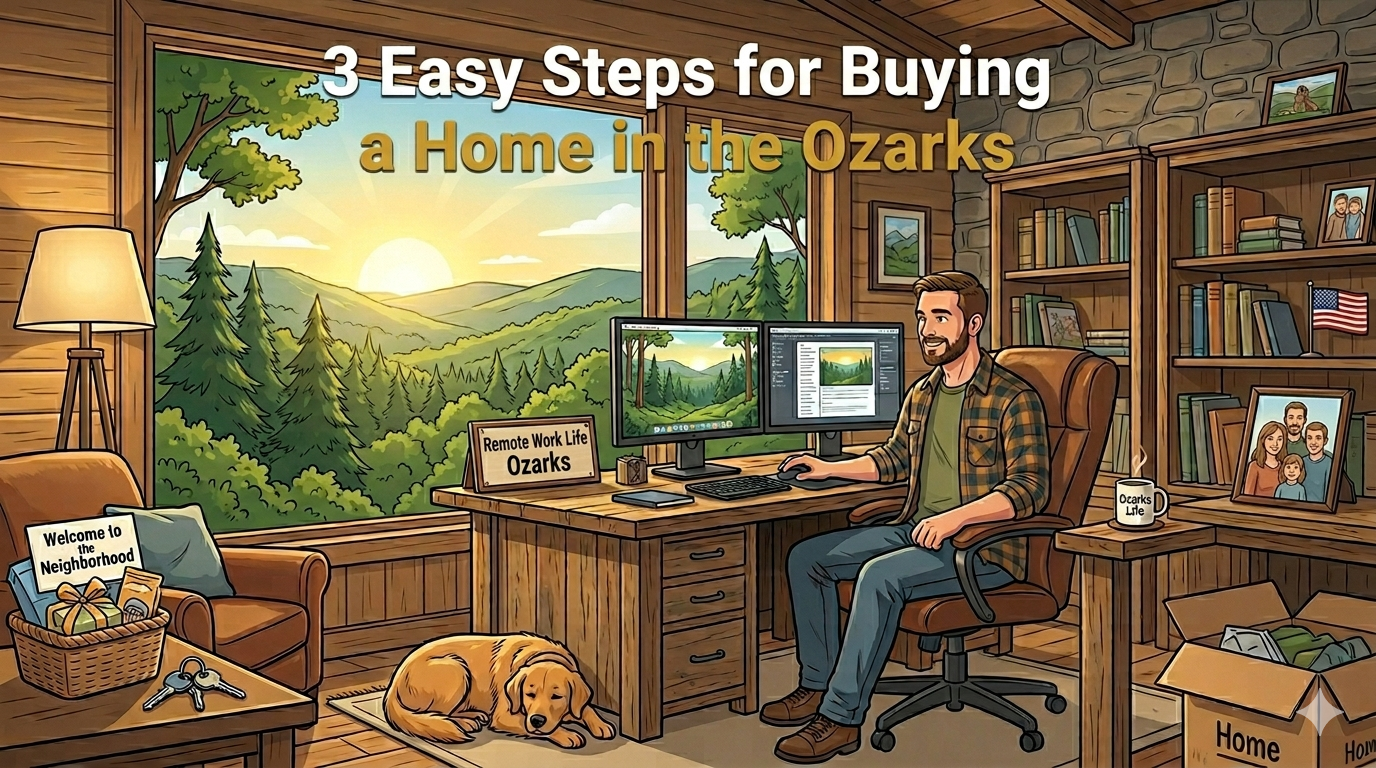
You’ve done the research. The numbers work. The towns make sense. Now you need to know how buying a home in the Ozarks actually works — especially as a remote worker.
My wife and I went through this process ourselves.
We’ve done long-distance home buying three times — Oklahoma, Texas, and finally here to the Ozarks. Twice as remote workers. Once self-employed. Each move was a little different, and we learned a few things along the way.
This article covers a lot.
What’s different about buying in the Ozarks versus what most out-of-state buyers are used to. What remote workers need to watch for. And how to evaluate a property before you fall in love with the wrong one.
New to the Ozarks? The Moving to the Ozarks article covers everything you need to know before you start narrowing down towns.
How Buying a Home in the Ozarks as a Remote Worker Differs From What You’re Used To
The process itself is straightforward.
Missouri and Arkansas both close at title companies — no real estate attorney required.
Closing costs are about 1-4% of the purchase price.
Earnest money in Missouri is 1–3% of the purchase price. That’s lower than some competitive markets where out-of-state buyers are coming from.
One thing that catches Arkansas buyers off guard: property taxes are billed based on ownership as of January 1st of the prior year. At closing, the tax responsibility between buyer and seller is addressed in the closing documents. The timing can feel confusing. So, ask your closing agent to walk you through how taxes are handled on your specific transaction.
The bigger difference if you’re buying a home outside of city limits are the properties themselves.
In the Ozarks, rural properties with wells, septic systems, and acreage are standard. If you’ve only bought homes in cities or suburbs, this is new territory. This is not complicated once you understand it. But it requires a different due diligence checklist. More on that below.
Working with an agent who knows rural properties makes that checklist a lot shorter.
#1: Match an Ozarks Property to Your Needs
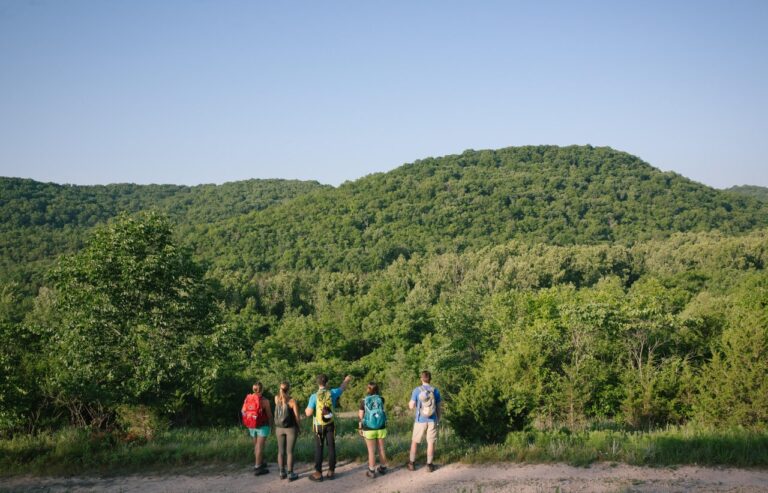
Where you land within the Ozarks matters as much as which town you choose. Here’s a simple framework for thinking about it:
In-town properties — Springfield, Branson, West Plains city limits, Mountain Home city limits — have public water and sewer, the best internet options in the region, and the closest access to amenities and coworking. Right for remote workers who want full infrastructure with Ozarks cost of living.
Semi-rural properties — outside city limits, on county roads, within 15–20 minutes of town — offer more space and land at a lower price point. Internet varies; Wisper Internet serves much of this tier, with Starlink as a reliable option, too. Wells and septic are common but not universal. Right for remote workers who want breathing room without being remote.
Truly rural properties — acreage, gravel roads, 20 or more minutes from town — are almost always on well and septic. Also, internet requires a check. Lowest prices, most land, most privacy. Right for remote workers whose want the rural lifestyle.
A property 10 minutes outside of West Plains is a different buying situation from a home inside West Plains city limits — even at a similar price.
Know which tier fits you before your search starts.
Thinking about making a move to the Ozarks?
The free Relocation Starter Kit walks you through everything you need to know — which area fits your lifestyle, what your budget buys, what to look for before you visit any property, and how to plan a scouting trip that counts.
On-the-ground knowledge from a transplant you won’t find in a standard relocation guide.
#2: Get Approved for a Mortgage
Two things — relocation approval and cost of living adjustment — are worth noting for remote employees going through the mortgage process.
Relocation Approval
If you’re moving to a new state, many lenders will require a letter from your employer confirming you can keep your job remotely.
This is standard practice and not a deal breaker. But it can catch people off guard.
I’ve run into this on multiple out-of-state moves.
Request the letter early — before you’re under contract — so it doesn’t slow your timeline.
A Potential Cost of Living Adjustment
Second, some companies adjust pay based on location.
Moving to the Ozarks from Seattle, Chicago, New York, California cities, or another high-cost market could mean a salary reduction. Since many employers tie salary to the local cost of living.
Check your company’s policy before you commit to a purchase price. After all, a pay cut would change your mortgage math. The remote salary article covers what your paycheck is worth in the Ozarks. Run those numbers before you start searching listings.
Extra Scrutiny for Freelancers and Contractors
Freelancers and contractors have more hurdles from lenders.
Two years of tax returns, proof of stable income, and sometimes profit and loss statements are standard requirements. A larger down payment often helps.
If this is your situation, get organized well before you start looking.
Loan Programs Worth Noting When Buying a Home in the Ozarks
USDA loans offer zero down payment on eligible rural properties.
Most of the Ozarks qualifies — including many properties that buyers wouldn’t expect. Income limits run up to $119,850 for a household of 1–4 in 2026. Check the USDA eligibility map at the address level before you assume a property qualifies or doesn’t.
Missouri’s MHDC First Place Program offers below-market interest rates and down payment assistance for first-time buyers and qualified veterans. Check if you qualify before assuming a conventional loan is your only option.
Also for veterans: VA loans offer zero down payment. See that article for more info.
Regardless of loan type, get pre-approved before you start searching.
#3: Know What to Inspect When Buying a Home in the Ozarks
This section is where out-of-state buyers need the most preparation.
Rural properties in the Ozarks almost always have private well water and septic systems. That’s not a problem. But it requires a different inspection process than a city home on public utilities.
Wells
As part of your inspection, you should request a water quality test — at minimum for bacteria, nitrates, and pH levels. You also want to know the flow rate and the age of the well and pump.
If you’re using a USDA loan, the requirements are specific: the well must be at least 100 feet from the septic system. Also, inspectors generally look for a flow rate of 3-5 gallons per minute. Know this before you make an offer so you’re not caught off guard.
After you move in, the EPA recommends testing your private well annually. It’s a simple step that protects your household.
Septic Systems
A septic system is standard for rural properties. And they work well — when they’re maintained.
The key question to ask on any rural property: how old is the system? Septic systems last 20 to 40 years with proper maintenance. A system approaching the end of its life is a negotiation point, not necessarily a deal breaker. But you need to know about it before you’re under contract.
Always get a septic inspection. Even when your lender doesn’t require it.
Replacement costs can run into the tens of thousands of dollars. The inspection itself usually costs $200 to $700 depending on scope.
Lagoons
Lagoons are a large open-air wastewater treatment system used on some rural properties.
If you haven’t encountered one before, it sounds alarming. It isn’t.
But it’s different from a standard septic system. And you should understand what it is and what maintenance looks like before you buy. Ask your inspector to walk you through it.
The Mindset
Get the inspections. Ask the questions. Don’t assume.
One more reference: my internet in the Ozarks article covers how to verify internet and cell service at any address before you make an offer. Treat it like any other inspection — do it before you commit, not after.
A good local agent will help you navigate all this. Buyers who understand these basics don’t get surprised at closing.
Thinking about making a move to the Ozarks?
The free Relocation Starter Kit walks you through everything you need to know — which area fits your lifestyle, what your budget buys, what to look for before you visit any property, and how to plan a scouting trip that counts.
On-the-ground knowledge from a transplant you won’t find in a standard relocation guide.
The Home Office Checklist — What to Look For Before Buying a Home in the Ozarks
This is the section most remote worker buyer guides skip — and it’s the one that matters most to you specifically.
Most buyers evaluate a home on the usual criteria: location, price, condition, layout. The home office gets treated as an afterthought. Then they move in and realize the only quiet room faces the driveway, shares a wall with the laundry room, or has one outlet for a corner of space that was clearly a storage room.
Here’s what to evaluate on every showing:
A Room with a Door
This is the baseline.
A nook in the bedroom doesn’t count. A corner of the living room doesn’t count. You need a dedicated room with a door that closes — for focus, for video calls, and for the mental separation between work and home. If a property doesn’t have one, ask whether a bedroom, basement, or outbuilding could serve that purpose.
Quiet Location Within the House
Where is the room relative to the kitchen, main living area, and any shared walls with neighbors? A room at the end of a hallway or on a separate floor is quieter. A room next to high-traffic areas will pick up noise during calls.
Video Call Background
Pull up your camera app during the showing and see what the lens sees.
A cluttered storage wall creates a different kind of problem. A window behind you creates lighting problems. It sounds minor until you’re on a Zoom call every day.
Natural Light
A well-lit workspace reduces fatigue and makes video calls look more professional.
Which direction does the potential office face? Morning light from the east is energizing. Afternoon light from the west can cause glare on screens. Look at the windows and think about where you’d set up your desk.
Electrical Capacity
Does the room have enough outlets? If you’re running multiple monitors, an electric standing desk, and recording equipment, you need adequate power.
An older rural home may have limited circuits — worth knowing before you start working from there.
Other Considerations
The Ozarks price point opens up options that aren’t realistic in expensive markets. For remote workers buying here, it’s worth looking at:
- A finished basement with its own entrance
- A detached garage or outbuilding that could be converted into a proper office
- A property with an accessory dwelling unit or separate structure
- An extra bedroom that becomes a dedicated workspace — something that’s simply out of reach in many coastal markets at any price
Buying a Home in the Ozarks Could be Your Best Move
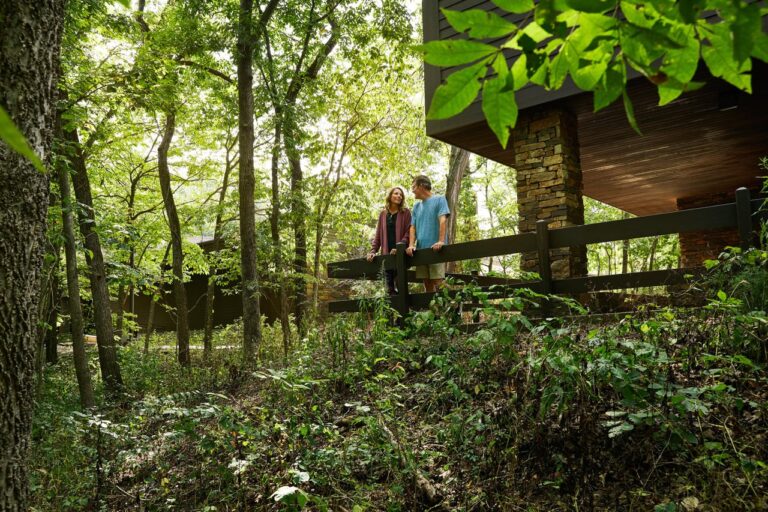
Buying a home in the Ozarks as a remote worker is straightforward once you know what’s different.
The process is efficient, the prices are favorable, and the loan programs available here — especially USDA in rural areas — are strong. The learning curve is rural property due diligence and a few remote-worker-specific mortgage considerations that most buyer guides don’t cover.
You can work from anywhere. Here’s how to find out if the Ozarks is the right anywhere…
The free Relocation Starter Kit helps you figure that out. Rural vs. suburbs, what your budget buys across the Ozarks, internet and cell service realities for remote workers, and how to plan a scouting trip that counts. Plus a location fit score based on your preferences and a town-for-you quiz.
On-the-ground knowledge from a former remote worker who ran the same numbers — and made the move.
Frequently Asked Questions: Buying a Home in the Ozarks as a Remote Worker
Is buying a home in the Ozarks complicated for out-of-state buyers?
No. The process is straightforward. Both Missouri and Arkansas close at title companies with no attorney required. The biggest adjustment for out-of-state buyers is rural property due diligence — wells, septic systems, and connectivity. A local agent who knows the region makes a significant difference.
Can I get a mortgage as a remote worker?
Yes. W-2 remote workers go through the same process as any other buyer, with two exceptions to plan for: lenders may require an employer letter confirming remote work if you’re relocating out-of-state, and your salary may be adjusted by your employer based on your new location. Get pre-approved before you start searching and sort out both of these questions before you commit to a purchase price.
Do most Ozarks properties have wells and septic systems?
In-town properties typically have public water and sewer. Rural and semi-rural properties — especially those with acreage — are almost always on well and septic. Always get both inspected before closing, even when the lender doesn’t require it.
What loan programs are available for buying a home in the Ozarks?
Several worth knowing about. USDA loans offer zero down payment on eligible rural properties — most of the Ozarks qualifies, with 2026 income limits up to $119,850 for a household of 1–4. Missouri’s MHDC First Place Program offers below-market rates and down payment assistance for first-time buyers and veterans. VA loans are available with zero down for eligible veterans. Conventional and FHA loans are available throughout the region.
What should I look for in a home office when buying in the Ozarks?
A dedicated room with a door that closes is the baseline. Beyond that: natural light, a quiet location within the house, adequate electrical capacity, and a video call background you’re comfortable with. The price point here often makes options available — finished basements, detached outbuildings, extra bedrooms — that aren’t realistic in more expensive markets.
How do I verify cell service and internet before making an offer?
Ask what the seller uses for both cell service and internet at the home. Go to the property and test your cell signal. Contact Wisper Internet directly with the address. Check Starlink availability at the address. Don’t rely on carrier coverage maps — they’re not accurate at the property level. The internet in the Ozarks article covers this process in full detail.