So what is the Ozarks?
Maybe someone told you they were moving there and you politely nodded along. All while quietly wondering, “What is the Ozarks really?” And “Just where is it exactly”? If so, you’re not alone.
The Ozarks is one of those places most Americans have heard of. But few can confidently point to it on a map. It shows up in movies and TV, in cost-of-living articles, in conversations about where remote workers are fleeing to — but the geography stays fuzzy for a lot of people.
If you’re researching a potential move here, that changes today.
This article will explain: what is the Ozarks, where it sits, how the Missouri and Arkansas sides differ, and which towns are worth putting on your radar. Think of it as the lay of the land before you start making real decisions.
What Is the Ozarks, Really? It’s Not What Most People Think
So what is the Ozarks in geographic terms?
It’s not a city, a county, or even a single state.
It’s a highland region — specifically, the Ozark Plateau — a broad, ancient upland that stretches across southern Missouri and northern Arkansas. It also includes northeastern Oklahoma and just a bit of southeastern Kansas.
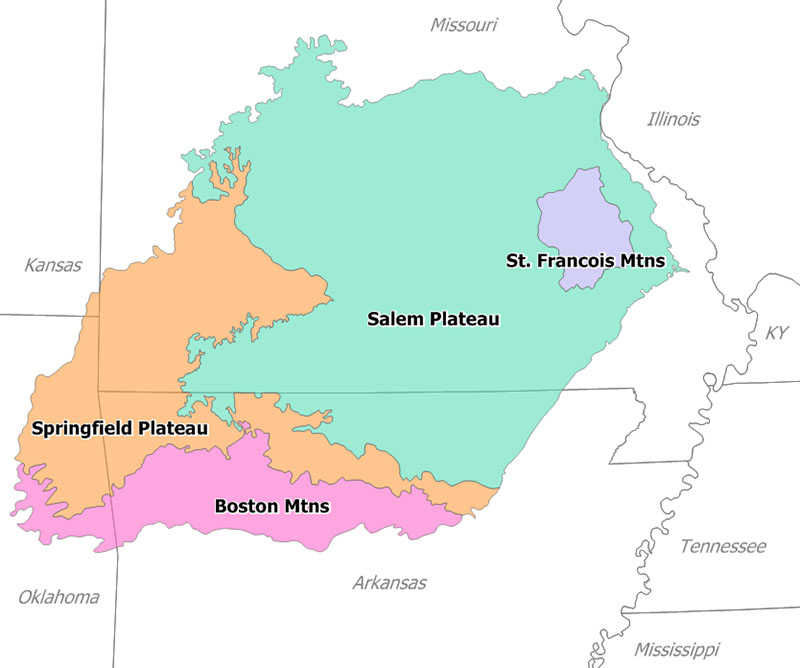
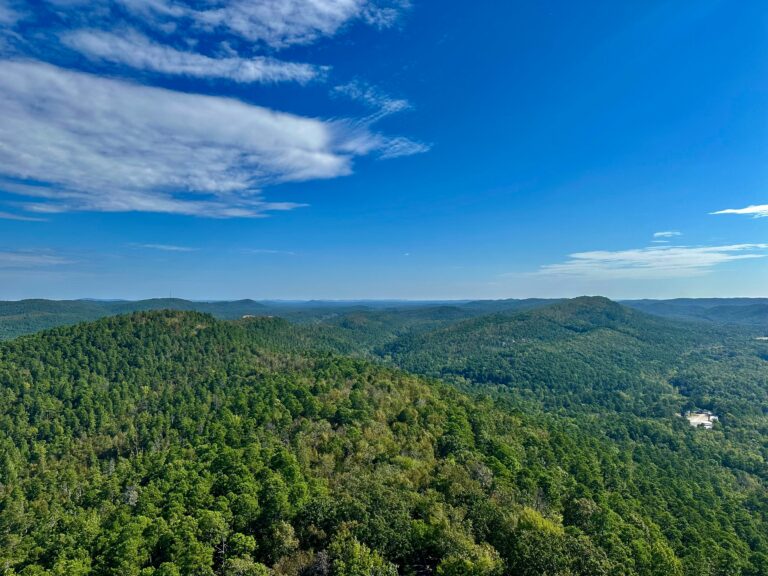
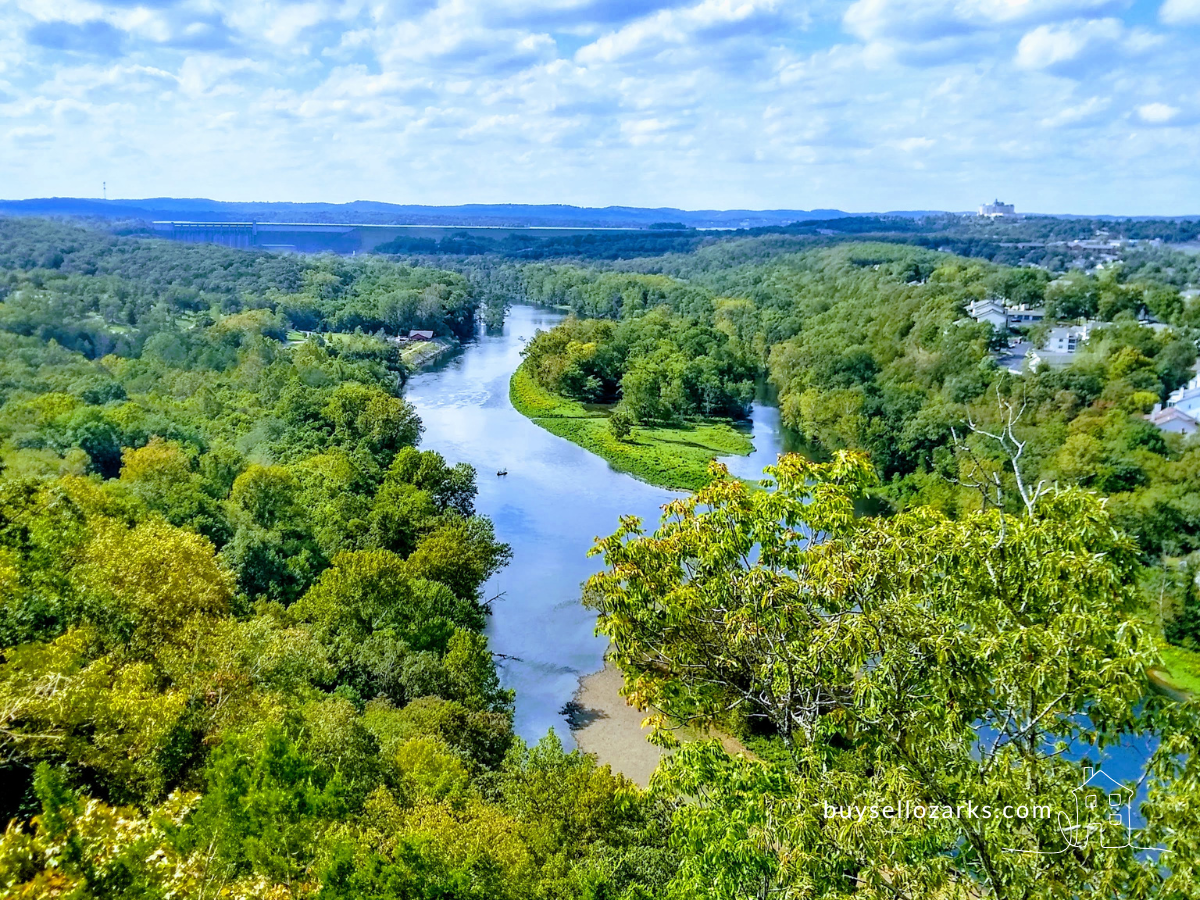
The Ozarks sit between roughly 1,000 and 2,500 feet in elevation. And this gives the region its defining character: rolling hills that flatten into ridges, deep river valleys carved by the Current, the White, and the Buffalo, and more freshwater lakes than most people expect.
It’s not mountainous like the Rockies.
It’s not flat like much of the Midwest either.
The Ozarks is its own geographic middle ground — and that’s part of the appeal.
The overall region covers roughly 47,000 square miles. Within that, you’ll find everything. There are small resort towns built around fishing lakes. There are also quiet county seats where not much has changed in decades. And the Ozarks has growing cities that attract remote workers and retirees from across the country.
Missouri Ozarks vs. Arkansas Ozarks — What’s the Difference?
This is the question most relocators actually need answered. And the honest answer is: it depends on what you’re looking for.
The Missouri Ozarks covers a wide swath of the southern half of the state. Major reference points include:
- Springfield (the region’s largest city and a legitimate small metro)
- Branson (the resort and entertainment hub on Table Rock Lake)
- West Plains (a quieter county seat with a regional hospital and amenities)
- Rolla and Poplar Bluff further out
The Missouri side feels slightly more developed. Infrastructure is more established. Chain retail is easier to find. And if you need a larger city, Kansas City and St. Louis are both reachable within a few hours.
The Arkansas Ozarks sits just across the state line and has a different character.
- Mountain Home, the largest town in the heart of Arkansas’s Ozarks, sits between Bull Shoals Lake and Norfolk Lake and draws a significant retiree population.
- Harrison, Yellville, and Horseshoe Bend are smaller but worth considering.
The terrain here tends to be more rugged — the valleys are deeper, the roads windier, and the sense of remoteness more pronounced. That’s a feature for a lot of people, not a bug.
Both Arkansas and Missouri have favorable taxes for retirees. See the table below. And we cover this in more detail in our Missouri vs. Arkansas retirement comparison.
A Quick Side-by-Side Comparison
| Missouri Ozarks | Arkansas Ozarks | |
|---|---|---|
| Major towns | Springfield, West Plains, Branson | Mountain Home, Harrison |
| Terrain | Rolling hills, river corridors | More rugged, deeper valleys |
| Major lakes | Table Rock, Lake of the Ozarks, Norfork | Bull Shoals, Norfork |
| Retirees need-to-knows | No state income taxes on Social Security income; IRA and 401(k) distributions are taxed as ordinary income | No state income taxes on Social Security income; IRA and 401(k) distributions are taxed as ordinary income, but taxpayers age 59½ or older can deduct up to $6,000 of qualified retirement income |
| Military veterans need-to-knows | No state income taxes on military pensions (income for military retirees); VA disability pay is also tax-free | No state income taxes on military pensions (income for military retirees); VA disability pay is also tax-free |
| Remote workers need-to-knows | Until recently, the most remote parts had spotty internet, but Starlink has mostly solved that issue | Until recently, the most remote parts had spotty internet, but Starlink has mostly solved that issue |
Neither side is objectively “better.”
The right answer depends on whether you’re prioritizing amenities and accessibility or land, quiet, and lower costs.
Thinking about making a move to the Ozarks?
The free Relocation Starter Kit walks you through everything you need to know — which area fits your lifestyle, what your budget buys, what to look for before you visit any property, and how to plan a scouting trip that counts.
On-the-ground knowledge from a transplant you won’t find in a standard relocation guide.
Major Towns and Areas Worth Knowing

You don’t need to memorize every community in the region.
But having a mental map of the major players helps. Here are the towns that come up most often in relocation conversations:
On the Missouri Side
Springfield/Nixa/Ozark, MO is the unofficial capital of the Missouri Ozarks. Springfield itself is a small city of around 170,000 people — the largest urban center in the region by a wide margin. The metro area just passed 500,000. The surrounding suburbs of Nixa and Ozark have grown rapidly and attract relocators who want Ozarks living with big-box retail, a regional airport, and a strong healthcare system nearby. If you want the feel of the region without fully committing to rural life, the Springfield metro area is worth a serious look.
Branson/Hollister, MO sits on the northern shore of Table Rock Lake and is best known as a tourist destination — but a growing number of people are choosing to live here year-round. The trade-off is seasonal traffic and a tourist-town economy; the upside is a genuinely beautiful lake setting and strong short-term rental potential if you’re interested in that.
West Plains, MO is one of the more complete small towns in the Missouri Ozarks. It has a regional hospital, a community college, decent grocery and retail options, and an active downtown. The population is around 12,000, which is enough to support real amenities without feeling crowded.
Willow Springs, MO is less on the radar than West Plains but offers a genuine small-town experience with lower property prices to match.
Gainesville, MO is one of the more remote options — the Ozark County seat, very small, deeply rural. Not for everyone, but for those who want true quiet and cheap land, it’s worth a look.
On the Arkansas Side
Mountain Home, AR is one of the most popular destination for retirees in the Arkansas Ozarks. It sits between two major fishing lakes, has a well-regarded regional hospital, and has a well-established community of out-of-staters who’ve made the same move you’re considering.
Harrison, AR is smaller and more affordable than Mountain Home, with a historic downtown and access to the Buffalo National River — one of the most scenic waterways in the South-Central US.
Bull Shoals/Lakeview, AR is a lakeside community that draws serious anglers and people looking for a quieter, more water-centric lifestyle. It’s small, but the lake access is unmatched.
Horseshoe Bend, AR has grown steadily as a retirement and remote-work destination, thanks in part to its position on Greers Ferry Lake and its affordable housing.
What Is the Ozarks NOT? Clearing Up the Wrong Ideas
What is the Ozarks to someone who’s never been? Often, a caricature.

People who haven’t spent time here may come with a mental image of what is the Ozarks. But that’s shaped by TV shows and old stereotypes. It’s worth clearing up a few things.
It’s not all dirt roads and no signal. Connectivity varies significantly by location — some areas have fiber, others rely on fixed wireless or satellite. But the picture is improving quickly. Thanks to Starlink, even the most remote towns have reliable internet that’s good enough for remote work. We cover this in detail in our internet and cell service article for remote workers.
It’s not economically depressed across the board. Some Ozarks counties have limited jobs. It’s the same as rural areas anywhere in the country. But others are stable and in some cases growing. The key is knowing which towns to look at and why.
It’s not just a vacation destination. Branson’s reputation as a resort town leads some people to assume the whole region is transient. It isn’t. Most Ozarks communities are full of long-term residents and multi-generational families — and increasingly, intentional transplants who chose this place.
It’s not as isolated as it looks on a map. Depending on where you land, you may be two to three hours from Springfield, Little Rock, Memphis, or even St. Louis. That’s not suburban proximity, but it’s not the middle of nowhere either.
Thinking about making a move to the Ozarks?
The free Relocation Starter Kit walks you through everything you need to know — which area fits your lifestyle, what your budget buys, what to look for before you visit any property, and how to plan a scouting trip that counts.
On-the-ground knowledge from a transplant you won’t find in a standard relocation guide.
Why People Are Moving Here
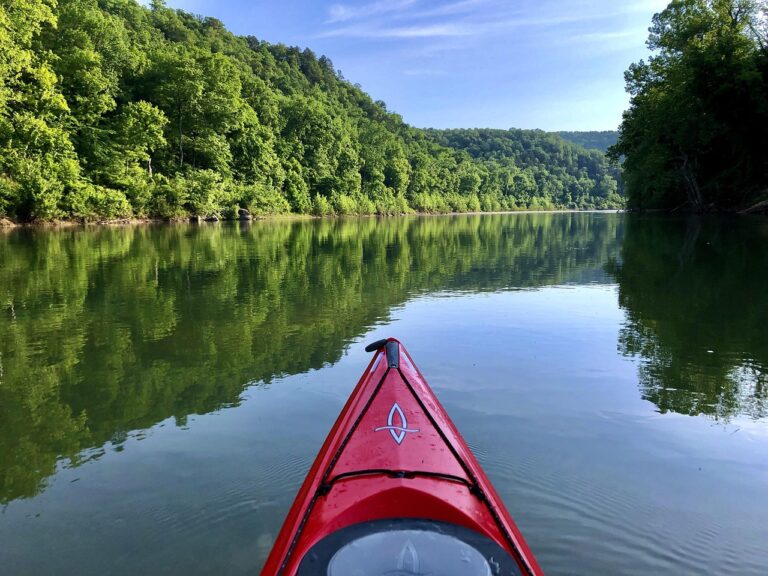
So, what is the Ozarks and why the Ozarks? It’s a place where:
- Housing that costs $500,000 in Nashville often runs $280,000 in Springfield
- Land is still available — and still affordable
- Outdoor access that most cities simply can’t match
- Rivers, lakes, and trails that aren’t crowded yet
- A pace of life that’s genuinely hard to find anywhere else
For remote workers, retirees, and military veterans (both those separating and retiring), the math has shifted. The Ozarks is the answer.
Now you know what the Ozarks is. The rest is figuring out if it’s right for you.
The details — costs, towns, tradeoffs, and logistics — are what the rest of this site is for.
Ready to take the next step
Thinking about making a move to the Ozarks? The free Relocation Starter Kit walks you through everything you need to know — which area fits your lifestyle, what your budget buys, what to consider before you tour any property, and how to plan a scouting trip that counts.
On-the-ground knowledge from someone who made the move — and who’s giving you info not found in a standard relocation guide.
Frequently Asked Questions About What Is the Ozarks?
Where exactly is the Ozarks located?
The Ozarks is a highland region covering much of southern Missouri and northern Arkansas, with smaller portions extending into northeastern Oklahoma and southeastern Kansas. It sits on an ancient plateau — one of the oldest landforms in North America — and spans roughly 47,000 square miles.
Is the Ozarks in Missouri or Arkansas?
Both. The Missouri Ozarks is more developed, with Springfield as the regional hub. The Arkansas Ozarks tends to be more rugged and rural, with Mountain Home as a popular destination, especially for retirees. Many relocators consider both sides before deciding.
What is the Ozarks known for?
The Ozarks is known for its clear spring-fed rivers, fishing lakes, hardwood forests, and affordable cost of living. It’s also known for a strong sense of community and a slower pace of life — which is a big part of why retirees, remote workers, and veterans keep choosing it over better-known destinations.
Is the Ozarks a good place to live?
Yes — for the right person. The Ozarks offers affordable housing, low property taxes, stunning natural scenery, and tight-knit communities. The tradeoffs are a limited white-collar job market in smaller towns and variable internet and healthcare access in rural areas. The Pros and Cons of Living in the Ozarks covers this in full.
What states make up the Ozarks?
Missouri and Arkansas make up the vast majority of the Ozarks region. Small portions also extend into northeastern Oklahoma and southeastern Kansas, but those areas are less commonly associated with the Ozarks in the context of relocation.
Is the Ozarks the same as the Smoky Mountains?
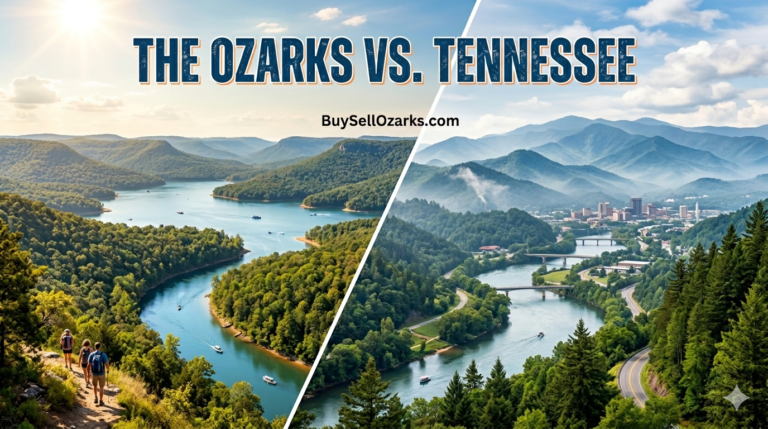
No — they’re separate regions entirely. The Smoky Mountains are in eastern Tennessee and western North Carolina. The Ozarks are in southern Missouri and northern Arkansas. The terrain is different too. The Smokies are higher and more dramatic. The Ozarks are older, lower, and covered in hardwood forest. Both are beautiful, but they offer a different lifestyle.