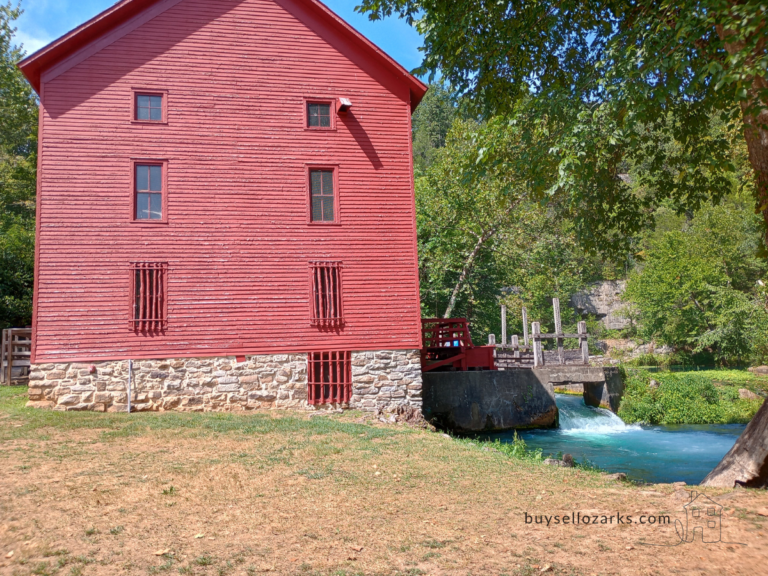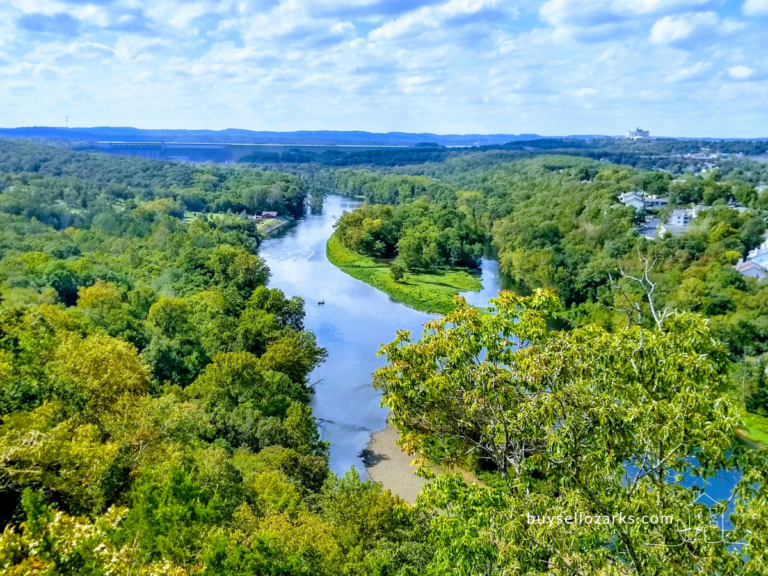

Ask around online about land restrictions in the Ozarks, and someone will tell you there aren’t any.
Facebook groups, YouTube channels, forums — you’ve likely seen some version of it.
Move to the Ozarks, buy some acreage, build what you want, and nobody will bother you. It’s one of the most common things people repeat. But it’s not exactly true.
Compared to most of the country, yes, land restrictions in the Ozarks are limited.
Just don’t assume that fewer restrictions means no restrictions.
Before you put money down on a piece of land, it helps to understand what’s true about land restrictions in the Ozarks — and what’s just internet folklore. Because if you assume, that’s a good way to have an expensive, avoidable mess on your hands.
Beyond Land Restrictions in the Ozarks: Why Homesteaders Prefer this Area
It’s not a coincidence that homesteaders keep moving here.
The Ozarks’ terrain and climate support the kind of lifestyle that people are after — water, timber, and long growing seasons.
And the region has a long-standing culture of fierce independence.
Plus, if you’re coming from a high cost of living state, the affordability is undeniable.
Just as culture and affordability are important, so is knowing the rules around land restrictions in the Ozarks…
Thinking about making a move to the Ozarks?
The free Relocation Starter Kit walks you through everything you need to know — which area fits your lifestyle, what your budget buys, what to look for before you visit any property, and how to plan a scouting trip that counts.
On-the-ground knowledge from a transplant you won’t find in a standard relocation guide.
Understanding Land Restrictions in the Ozarks: Zoning, Codes, and Deed Restrictions
Most of the confusion around land restrictions in the Ozarks comes from lumping three separate things — zoning, building codes, and deed restrictions — into one.
They’re not the same. A property can be free of one and still bound by another.
Land Restrictions in the Ozarks: Zoning
Zoning is about use — what you can do with the land.
Can you have livestock? Any restrictions on the type of livestock? Can you operate a business from the property?
Rural Arkansas and Missouri Ozarks counties don’t have countywide zoning. (But even rural areas of Stone and Taney counties in Missouri — the greater Branson area — are subject to countywide planning and zoning, due to Branson’s tourism.)
And this is where the “no land restrictions in the Ozarks” notion comes from.
Land Restrictions in the Ozarks: Building Codes
Building codes are about construction — how you must build a new structure.
Think wiring, plumbing, and structural standards. Some counties have adopted these, many haven’t. Out in the rural Ozarks, there are no countywide building codes.
What Deed Restrictions Control
Deed restrictions are private and property-specific — conditions attached to that exact parcel by a previous owner or developer, sometimes decades ago.
Deed restrictions won’t show up in a general “does this county have zoning” Google search.
Instead, they show up in a title search, and only for that specific piece of land.
How Land Restrictions in the Ozarks Differ Between Missouri and Arkansas
Both states follow a similar pattern: Incorporated cities and towns tend to have zoning and building codes, while unincorporated county land often doesn’t, or has a lighter version of it.
What it doesn’t mean is that every county works the same way, or that this way of operating stays the same forever.
Counties adopt ordinances. Boundaries shift.
A county with no zoning five years ago might have one now.
So, never assume that you’re in the clear without checking first.
Potential Land Restrictions in the Ozarks
Here’s the part that surprises people…
Even in a county with zero zoning and no building codes, there are still things that will make or break whether a piece of land works for homesteading in the Ozarks.
Floodplain status
A property can look perfect but be in a flood zone that limits what you can build, or where.
Septic permitting
No countywide building code doesn’t mean no health department involvement.
Septic systems require a percolation test to check whether the soil can safely absorb wastewater. And if it doesn’t “perc,” then that changes what you can build on the property.
Missouri exempts single-family lots of 3 or more acres from the state permitting requirement. Arkansas exempts single-family lots of 10 or more acres, provided the system stays a set distance from the property line.
Confirm your parcel qualifies instead of just assuming it does.
Well permitting
Well construction works differently than zoning or building codes.
Both Missouri and Arkansas regulate well permitting at the state, not county, level.
In Missouri, you need a state permit through the Department of Natural Resources to drill or repair a well for compensation. The well must meet statewide construction standards. Landowners who drill their own well are exempt from the permit requirement, but not from the state’s standards.
Arkansas works similarly: Anyone drilling for hire needs an Arkansas Water Well Contractor’s License through the state’s Water Well Construction Committee, with the same self-install exception for homeowners.
Neither state requires a separate county-level well permit. That said, the local health department may step in to test the water.
But most of the time, you’ll be the one asking the health department for a well test. Not the other way around.
And before drilling, check site-specific factors — like distance from a septic system, a neighboring well, and property boundaries.
Easements and access
Land-locked parcels, shared driveways, and utility easements can restrict what you do with a property regardless of zoning.
Mineral rights
This is less common as a deal breaker.
But it’s worth knowing whether mineral rights are included with the land or were previously sold off at some point.
Thinking about making a move to the Ozarks?
The free Relocation Starter Kit walks you through everything you need to know — which area fits your lifestyle, what your budget buys, what to look for before you visit any property, and how to plan a scouting trip that counts.
On-the-ground knowledge from a transplant you won’t find in a standard relocation guide.
Where Buyers Get Burned by Land Restrictions in the Ozarks
The buyers who get burned aren’t usually the ones who researched too little.
They’re the ones who researched one thing — likely zoning — and treated it as a stand-in for everything else. The land checks out as “no restrictions,” so their due diligence stops there.
Then, it turns out the parcel doesn’t perc for a septic system. Or it’s technically landlocked, and the only access is a handshake agreement with a neighbor that was never put in writing. Or half the acreage sits in a floodplain.
None of these are zoning problems. But they are land restrictions that matter. And all are expensive to discover after closing instead of before.
Before You Commit to a Property
To recap, “low restrictions” is the start of the research, not the end of it.
The zoning and building codes questions are easy to answer. The rest takes someone who knows what to check on a parcel before you’re the one who owns the problem.
That’s the part worth walking through before you’re under contract, not after.
Ready to take the next step
Thinking about making a move to the Ozarks? The free Relocation Starter Kit walks you through everything you need to know — which area fits your lifestyle, what your budget buys, what to consider before you tour any property, and how to plan a scouting trip that counts.
On-the-ground knowledge from someone who made the move — and who’s giving you info not found in a standard relocation guide.
Frequently Asked Questions About Land Restrictions in the Ozarks
Does land in the Ozarks have zoning restrictions?
It depends on the county. Many unincorporated areas of Ozarks counties have no zoning, but incorporated cities and towns almost always do. Check the county and any area near a city limit, since rules can change block by block.
What’s the difference between zoning and deed restrictions?
Zoning is set by the county or city and controls what you can do with land in general. Deed restrictions are private conditions attached to one specific parcel, often by a previous owner or developer, and only show up in a title search.
Do I need a building permit to build in a rural Ozarks county?
Some counties require it, many don’t, and it can depend on how close the property is to a city or town. Always confirm with the county before assuming either way.
How do I find out if a property has deed restrictions?
A title search will show any deed restrictions attached to that parcel. A general internet search for the county’s zoning rules will not catch these, since they’re specific to the property, not to the area.
What acreage is exempt from septic permitting in Missouri and Arkansas?
Missouri exempts single-family lots of 3 or more acres from the state permitting requirement. Arkansas exempts single-family lots of 10 or more acres, as long as the system stays a set distance from the property line.
Can I build on Ozarks land with no zoning at all?
Zoning is only one piece. Even with no zoning, you’ll still need to check floodplain status, septic and well permitting, easements, and deed restrictions before you can be sure what you can build.