
Retirement is one of the biggest decisions you’ll ever make. And where you spend it matters just as much as when you retire. If retiring in the Ozarks keeps showing up in your research, there’s a reason for that.
This place has a way of pulling people in — the affordability, the land, the pace of life.
But it’s not for everyone. This article will help you figure out if it’s right for you.
I made this move myself. I left behind a faster, more expensive life and landed in the Ozarks — and I haven’t looked back. So when I tell you what’s great here, and what’s not, I mean it. No sales pitch. Just the honest picture about retiring in the Ozarks.
What Does Retiring in the Ozarks Look Like?

Retiring in the Ozarks looks like slow mornings on a porch with a cup of coffee and a view of the woods. It looks like a neighbor who actually waves. It looks like fishing on a Tuesday because you can.
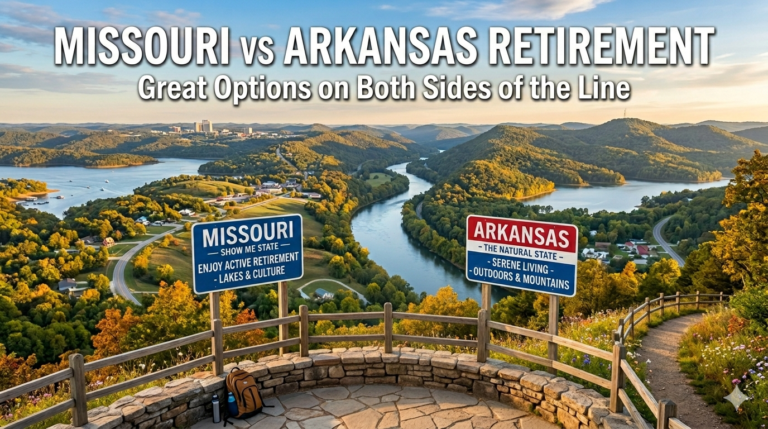
This region stretches across southern Missouri and northern Arkansas, and it’s built around the outdoors. Table Rock Lake. Bull Shoals. The Buffalo National River. Hundreds of miles of trails, float trips, and state parks. If you’ve dreamt about trading rush hour for riverbanks, this place delivers.
The pace here is different from what most people are used to. It’s quieter. More self-reliant. More connected to the land.
That’s not a downside — for the right person, it’s the whole point.
Retiring in the Ozarks is real shift, and it’s worth knowing that going in.
Climate — The Honest Version
Let’s talk weather, because retirees always ask, and you deserve a straight answer.
The Ozarks has four real seasons.
Winters are mild compared to the upper Midwest — temperatures dip below freezing, and you’ll see some ice and occasional snow, but nothing like Minneapolis or Chicago. Summers are warm and humid, but not brutal. You’re not baking in Phoenix-level heat. Fall is spectacular — cool air, color on the trees, perfect hiking weather.

The one thing to know: the Ozarks are on the eastern edge of traditional tornado alley (the one that runs through Texas, Oklahoma, and Kansas). Tornado alley has recently shifted east, but Arkansas and Missouri are still included.
So, spring storm season is real. Severe weather passes through. Most locals take it seriously, know their plans, and don’t lose sleep over it. But if severe weather is a hard no for you, that’s worth factoring in.
On the bright side, if you’re retiring in the Ozarks from the Pacific Northwest, you’ll get more sunshine.
Coming from Florida? Then you’ll get real winters for the first time in years — and maybe even enjoy them. If you’re escaping a brutal northern winter or a sweltering Sun Belt summer, the Ozarks hits a comfortable middle.
Cost of Living — What Retiring in the Ozarks Actually Costs
This is where retiring in the Ozarks starts to look attractive, especially on a fixed income.
Property taxes in Missouri and Arkansas are among the lowest in the country.
Both states also offer senior tax exemptions and freeze programs that can lock in your property tax rate once you hit a certain age. Groceries, utilities, and everyday services cost noticeably less than most metro areas. You stretch your dollars further here — and that’s not a small thing when you’re living on Social Security and maybe a fixed pension.
Housing is the big cost savings for those retiring in the Ozarks.

The kind of home that costs $600,000 in a coastal city or a Sun Belt suburb costs $250,000–$350,000 here — sometimes less. You can find a solid three-bedroom home on several acres for what a condo costs in Phoenix or Denver.
Healthcare costs less, too. Which brings me to the next section.
Thinking about making a move to the Ozarks?
The free Relocation Starter Kit walks you through everything you need to know — which area fits your lifestyle, what your budget buys, what to look for before you visit any property, and how to plan a scouting trip that counts.
On-the-ground knowledge from a transplant you won’t find in a standard relocation guide.
Healthcare in the Ozarks — What to Know Before You Move
Healthcare is a top concern for those retiring in the Ozarks. I’m going to give you the real picture.
The regional anchors are solid.
Springfield, Missouri has Mercy Hospital and CoxHealth — two full-service hospital systems with specialists across most major fields. Mountain Home, Arkansas has Baxter Health, which serves a large portion of northern Arkansas well. If you’re within reasonable distance of these hubs, you have real access to quality care.
Smaller towns have clinics and urgent care. But for specialist appointments, you may be driving 30 to 60 minutes.
For some people, that’s no problem at all. For others — especially if you’re managing a complex condition that needs frequent specialist visits — it’s a real consideration. Telehealth has filled in a lot of gaps, and most providers now offer it routinely.

Here’s my honest take: if you’re in good health and managing routine care, the Ozarks works well. If you have complex medical needs, the town you choose matters more than most people realize.
Community and Social Life — Will You Fit In?
This is the question retirees don’t always ask out loud, but it matters more than almost anything else.
People here show up for each other — when someone needs help, neighbors come. That sense of community is genuine, and it’s one of the things people love most after they move.
Veterans will feel at home.

VFW posts and American Legion chapters are active throughout the region. Military culture is woven into the fabric of these communities, and the respect for service is real — not performative.
Churches are central to social life in the Ozarks. Even if that’s not your thing, it helps to understand that it shapes the culture. People connect through faith communities here in a way that’s different from most cities.
Also, there’s local theater, live music, arts festivals. The Branson area draws big names but also supports a genuine arts community.
Library systems are active.
Hiking clubs, fishing groups, and outdoor communities give active people retiring in the Ozarks plenty of ways to connect.
Newcomers are welcome here — but you integrate at the speed of your own effort. If you show up and get involved, you’ll find your people faster than you’d expect. If you wait for community to come to you, it moves slower. That’s true in most places, and especially true in small towns.
Thinking about making a move to the Ozarks?
The free Relocation Starter Kit walks you through everything you need to know — which area fits your lifestyle, what your budget buys, what to look for before you visit any property, and how to plan a scouting trip that counts.
On-the-ground knowledge from a transplant you won’t find in a standard relocation guide.
Questions to Ask Before Retiring in the Ozarks
Before you search for another home on Zillow, take a few minutes with these questions.
Do you want to know your neighbors — actually know them, not just wave? Do you want outdoor access built into your daily life? If you’re looking outside the metro areas, can you handle driving 20 to 30 minutes for errands? Are you looking for quiet and space, or do you need city energy nearby to feel like yourself?
How important is airport access to you? The closest major airports are in Springfield and Fayetteville. If you fly frequently to see family, that’s worth factoring in.
Are you drawn to small-town life, or do you need a city close by to feel grounded?
There’s no wrong answer. But knowing your answer makes everything else clearer.
My Take — Who Thrives Here and Who Doesn’t

People who thrive when retiring in the Ozarks tend to love the outdoors, want a slower pace without feeling isolated, care more about community than convenience, and want their retirement dollars to go a lot further.
Retirees often say, after a year or two, that they can’t believe they waited so long.
People who struggle are usually those who need frequent specialist care in one location, want walkable urban amenities, or expected city-level services in a rural setting. The Ozarks will disappoint them — not because it’s lacking, but because it’s a different kind of place than what they were picturing.
A slower pace. Land. Neighbors I actually know. Lower costs. And access to the outdoors every single day. That’s what I found. It’s what a lot of retirees find too — once they give themselves permission to make the move.
The Ozarks isn’t for everyone.
But for the right person, retiring in the Ozarks is one of the best decisions they’ll ever make.
Retirement in the Ozarks sounds right — here’s where to start
Now comes the harder question: which area, which town, and what does your budget get you?
The free Relocation Starter Kit walk you through this and more. Rural vs. suburbs decision, what your budget buys at different price points, what to check before you tour any Ozarks property, and how to plan a scouting trip that counts. Plus a location fit score tool and town-for-you quiz that helps you narrow down the right Ozarks area.
On-the-ground knowledge from someone who made this move himself — and built this site to help others research theirs.
Frequently Asked Questions About Retiring in the Ozarks
Is the Ozarks a good place to retire?
Absolutely – for the right person. The cost of living is low, the outdoors are built into daily life, and the communities are tight-knit. You won’t get the big-city amenities. But that’s what retirees choosing the Ozarks want – space, affordability, and a slower pace of life.
What are the best towns in the Ozarks for retirees?
It depends on your priorities. Springfield offers the most services, healthcare access, and amenities. Mountain Home, Arkansas draws a large retiree population with lake access and low costs. Branson offers entertainment and lake living. West Plains is affordable and is near the Mark Twain National Forest and other outdoor activities. The right fit depends on what matters most to you.
How is healthcare in the Ozarks for retirees?
Regional hubs like Springfield and Mountain Home have solid hospital systems and specialist access. Smaller towns have clinics and telehealth options. For routine care, most areas work well. If you have complex medical needs, proximity to Springfield or another regional hub matters more.
Is retiring in the Ozarks affordable on Social Security?
For many people, yes. Property taxes are low, housing costs are well below national averages, and everyday expenses cost less than most metro areas. Both Missouri and Arkansas also offer senior tax benefits. So, fixed-income living is more manageable here than in most parts of the country.
What is the weather like in the Ozarks for retirees?
Four real seasons — mild winters, warm summers, pleasant springs, and spectacular falls. That said, ice storms happen occasionally in the winter. Severe weather is possible in the spring. Overall, the climate is more moderate than the northern Midwest and less extreme than the desert Southwest.
Is the Ozarks safe for retirees?
Generally, yes. Rural areas tend to have lower crime rates than urban centers, and the Ozarks follows that pattern. Smaller communities have strong neighborhood awareness. Like anywhere, it varies by town and neighborhood.